 Canada
 United States
 United Kingdom
 Nigeria
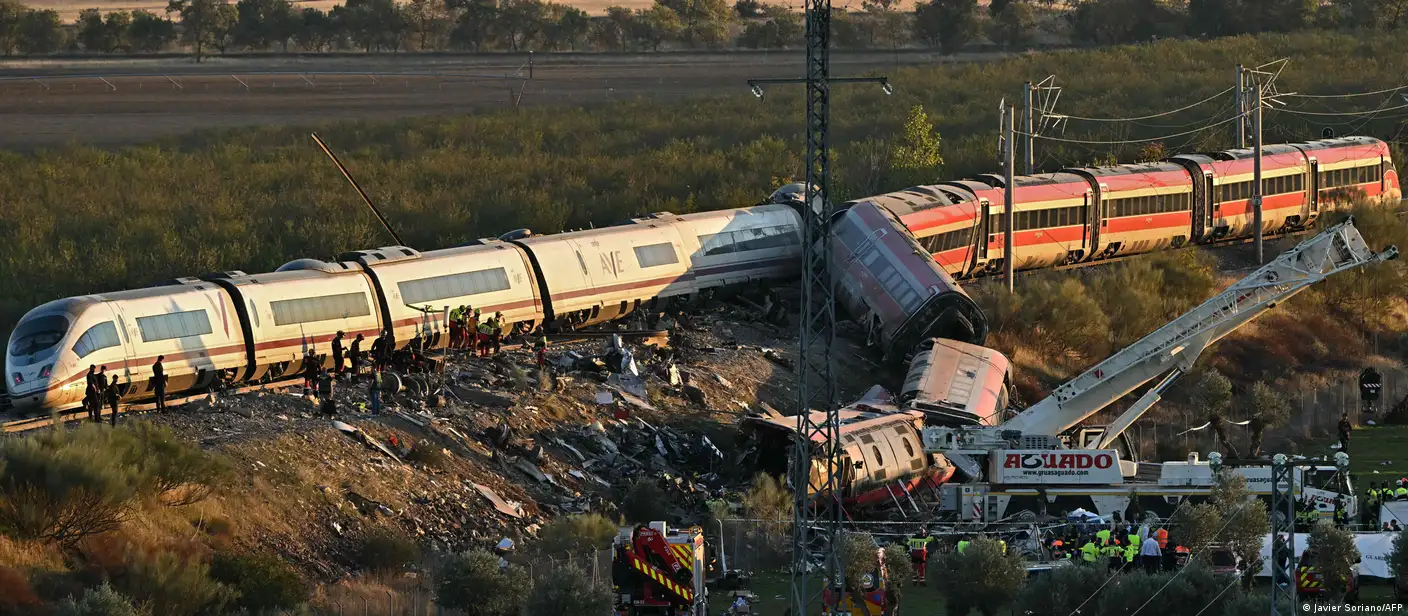
Audio recordings released by Spanish media have raised questions about the events leading up to a deadly train collision that killed at least 69 people and injured dozens in Spain.
The crash occurred on Wednesday when a Renfe train travelling from Madrid to Seville struck the rear of a stationary Iryo train. Authorities are investigating the cause of the disaster, one of Spain's deadliest railway accidents in recent decades.
Recordings Reveal Communications Before Collision
The recordings, published by Spanish media outlets including El País and RTVE, capture conversations between train drivers and a railway control centre in Madrid shortly before the collision.
In one exchange, a controller reportedly instructed the Renfe driver to continue at normal speed using an alternative signalling procedure after a technical failure affected the automatic signalling system.
Meanwhile, the driver of the Iryo train informed the control centre that communication with the train's control system had been lost and that the train remained stationary near a signal at Urda.
A subsequent recording suggests the control centre had been informed that the Iryo train could not move as the Renfe train approached. Spain's transport minister, Óscar Puente, described the decision to allow trains to resume movement without speed restrictions as "inexplicable".
Authorities Investigate Cause of Disaster
Prime Minister Pedro Sánchez visited the crash area and said authorities were working around the clock to establish exactly what happened and strengthen railway safety measures.
The collision involved a Renfe train carrying 397 passengers and an Iryo train with 147 passengers. Reports indicate that a problem with the automatic signalling system had forced trains to stop on the affected stretch before the Renfe train was instructed to proceed.
The publication of the recordings has triggered political debate, with some politicians criticising the leaks and others warning against placing responsibility solely on individual railway workers.
Spain Begins National Mourning
Spain has begun three days of national mourning for the victims. Emergency teams continued working through the night to recover victims and identify the dead, while authorities urged families of missing passengers to provide DNA samples at designated centres.
The disaster also prompted protests outside the Transport Ministry in Madrid, where demonstrators demanded accountability. Railway drivers proceeded with a planned strike on Thursday, with their union saying the action was in defence of railway safety.
The crash is Spain's deadliest railway disaster since 2013, when 80 people died in a train accident near Santiago de Compostela.
BBC News