 Canada
 United States
 United Kingdom
 Nigeria
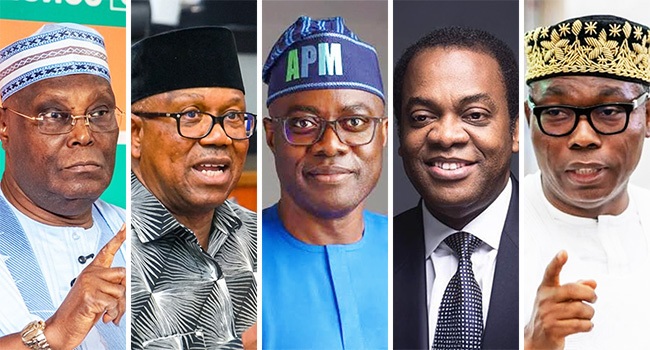
Opposition Coalition Sets November 23 Summit, but Presidential Ticket Dispute Remains Unresolved
Participating parties are expected to sign cooperation documents as negotiations continue ahead of the 2027 elections
Nigeria’s opposition coalition has announced November 23 as the date for a summit aimed at strengthening cooperation among participating political parties ahead of the 2027 general elections.
The meeting, scheduled to hold at the NAF Conference Centre in Abuja, is expected to provide an opportunity for the parties to formalise aspects of their collaboration through proposed agreements and a common reform agenda.
The Coalition for Democracy, formerly known as G100, said participants would sign a National Covenant for Democratic Renewal and a Framework for Opposition Unity. They are also expected to adopt a National Reform Programme.
One of the proposed areas of cooperation is joint protection of votes at polling units. However, the documents are yet to be formally adopted, and details of how the proposed arrangements would operate have not been publicly established.
Uncertainty Over Participating Parties
Recent reports have identified the African Democratic Congress (ADC), Action Peoples Movement (APM), National Democratic Congress (NDC), Peoples Democratic Party (PDP), Peoples Redemption Party (PRP) and Social Democratic Party (SDP) as participants in the process.
Earlier reports, however, listed nine parties, including the Democratic Leadership Alliance (DLA), National Rescue Movement (NRM) and Young Progressives Party (YPP), alongside the six recently mentioned.
The omission of the additional parties from the latest list does not necessarily mean they have withdrawn. Questions also remain about which representatives have the authority to commit their respective parties to any agreement, particularly where internal leadership disputes exist.
NDC Favours Cooperation Around Obi-Kwankwaso Ticket
The National Democratic Congress has indicated support for cooperation among opposition figures around the political partnership involving Peter Obi and Rabiu Kwankwaso.
In a telephone interview on November 15, the party’s National Publicity Secretary, Osa Director, said other opposition leaders could rally behind the two politicians.
However, he did not confirm a formal proposal or establish whether the NDC was involved in reported bilateral negotiations between former Vice President Atiku Abubakar and Oyo State Governor Seyi Makinde.
The party’s position suggests that its participation in a broader opposition framework does not automatically amount to an agreement to surrender its preferred presidential ticket.
ADC Maintains Engagement Amid Leadership Questions
The African Democratic Congress has also remained involved in discussions among opposition figures, although no formal agreement involving Atiku and Makinde has been confirmed.
Party spokesman Bolaji Abdullahi and Atiku’s aide, Phrank Shaibu, have acknowledged ongoing opposition engagements. However, reports suggesting that the two camps had reached a compromise were based on unnamed sources and did not disclose specific terms.
The party is therefore still involved in negotiations while maintaining its own presidential ambitions. Its internal leadership litigation also raises questions about which officials would have the authority to approve and implement any eventual agreement.
APM Yet To Confirm Any Political Concession
The Action Peoples Movement has similarly indicated that discussions surrounding a possible Atiku-Makinde arrangement are yet to produce a concluded agreement.
Oyo State APM Publicity Secretary, Michael Ogunsina, described the proposed alliance as unfinished. Meanwhile, Makinde’s campaign has maintained that the governor is contesting to win and has pledged to serve only one term if elected.
The position is linked to the argument that the South should retain the presidency until 2031. This leaves an important question for negotiators: how would any proposed arrangement involving Atiku address Makinde’s position on presidential rotation?
PRP Open To A Common Choice, But Protects Its Identity
The Peoples Redemption Party has expressed conditional willingness to support a common opposition candidate if the participating parties first agree on a shared national vision.
Former Cross River State Governor Donald Duke presented this position on November 10, saying the party would respect a democratically reached decision.
However, PRP Chairman Hakeem Baba-Ahmed has opposed any arrangement that would dissolve the party’s structures into another political organisation.
The party’s position leaves room for cooperation across party lines, but the process for selecting a candidate and the commitments expected from participating parties remain unsettled.
SDP Continues Its Own Campaign Preparations
The Social Democratic Party has also been making preparations around its presidential campaign.
The mobilisation council supporting the Adewole Adebayo-Bugaje ticket has been developing plans covering states, local governments, wards and polling units.
These preparations indicate that the party is still organising around its own ticket. No fresh commitment to withdraw Adebayo or endorse another opposition candidate has been established.
PDP Representation Remains A Key Issue
Questions over representation also affect the Peoples Democratic Party, where internal divisions have complicated the authority of competing leadership groups.
Ini Ememobong, spokesman for the Turaki-led faction, has said its candidates remain committed to the cooperation process.
However, that position does not establish that the entire PDP or all its candidates have accepted a binding coalition agreement. The November 23 summit is expected to provide an opportunity to clarify which party representatives will sign the proposed documents and the structures they are authorised to commit.
Vote Protection Could Become Common Ground
Despite the unresolved presidential ambitions, joint protection of votes could provide one of the clearest areas for cooperation among the opposition parties.
For the proposal to produce practical results, the parties would need to establish common training programmes, funding arrangements, reporting procedures and coordinated deployment of polling agents.
So far, there is no publicly verified evidence of functioning joint state committees, pooled resources or shared polling-unit operations. Neither has a completed agreement on zoning, power-sharing, party merger or a common presidential ticket been established.
Attention Turns To November 23 Summit
The outcome of the Abuja meeting could provide a clearer picture of how far the opposition parties are prepared to go in building a common political platform ahead of the 2027 elections.
Key issues to watch include the attendance of party leaders, the authority of those signing the proposed agreements, publication of the documents and clarification of the coalition’s membership.
Equally important will be whether the proposed commitments translate into practical instructions for party structures at state, local government, ward and polling-unit levels.
While the presence of political leaders at the summit would demonstrate continued engagement, signed agreements and evidence of implementation would provide a stronger indication that the discussions are developing into a functioning electoral alliance.
Source: Channels Television