 Canada
 United States
 United Kingdom
 Nigeria
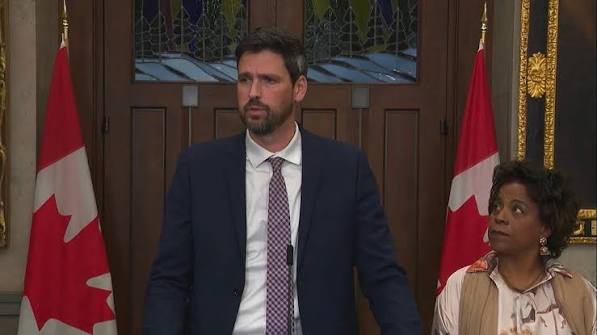
Liberals Reject Separate Vote on Advance MAID Requests, Justice Minister Says
Sean Fraser says keeping the provisions together could help prevent unnecessary suffering
Canada’s Liberal government will not remove provisions allowing advance requests for medically assisted dying from its proposed legislation to update the country’s MAID framework, despite calls from Conservative lawmakers for a separate parliamentary vote.
Justice Minister Sean Fraser defended the decision during a Thursday appearance before a House of Commons committee, arguing that delaying the proposed changes could prolong the suffering of people whose medical conditions may eventually prevent them from making decisions for themselves.
“I think we have an opportunity to minimize suffering, which is every bit as important or more than meeting legislative timelines,” Fraser told the committee.
The debate centres on Bill C-41, introduced in the House of Commons on October 27. The legislation contains two major proposed changes: preventing access to MAID solely on the basis of mental illness and allowing certain individuals to make advance requests before losing the capacity to consent.
Conservatives Question Decision to Keep Provisions Together
Conservative members of the justice committee challenged Fraser over the government's decision to keep both proposals in one bill rather than allow separate votes.
Conservative MP Andrew Lawton questioned why Parliament was being asked to consider the complex issue of advance requests within the same legislative timetable as the proposed restriction on MAID for people whose only underlying condition is a mental illness.
The issue of advance requests does not face the same statutory deadline as the mental illness provision. However, Fraser insisted that the absence of a legislative deadline did not make the matter less urgent.
“Though there is a legislated timeline in place on the mental illness issue, I don't want to suggest that the advance request issue is not also urgent,” Fraser said.
Background to Canada's MAID Legislation
Canada introduced its medical assistance in dying framework in 2016. In 2019, the Superior Court of Quebec struck down part of the law because eligibility was restricted to people whose deaths were reasonably foreseeable.
Parliament subsequently passed Bill C-7 in March 2021, removing that requirement in response to the court's ruling. The legislation also temporarily delayed the expansion of MAID to people whose sole underlying condition is a mental illness until March 2023.
That provision was later postponed to 2024 and then again to March 2027. Unless Bill C-41 is passed or the government introduces another extension, the exclusion is scheduled to expire in March next year.
Fraser Cites Concerns About Future Loss of Capacity
Fraser said his decision to advance the provisions together was driven by concerns raised during conversations with people living with serious illnesses, rather than medical advice on the legislative timetable.
He described the difficulty faced by individuals who know their condition may eventually take away their ability to make decisions about MAID, even when they have already expressed a wish to pursue the option.
“It's a very painful thing to sit down with someone who knows that their life is about to come to an end, that has the added challenge of being on the verge of losing their capacity to make decisions for themselves.”
Minister Outlines Proposed Safeguards
Addressing concerns about the advance-request provision, Fraser said the proposed system would include safeguards to ensure that requests are assessed and applied appropriately.
Under Bill C-41, a physician with expertise in the person's underlying illness would first establish the conditions under which MAID could be administered. Two independent medical assessors would then determine whether those conditions had been met.
The assessors would also have to be satisfied that the person's suffering was intolerable and that the illness was incurable before the individual could qualify under the proposed arrangement.
Fraser added that people who had lost the ability to recognise themselves or others but appeared happy and were enjoying life would not qualify under the proposed approach, because they would not be experiencing intolerable suffering.
Source: CBC News