 Canada
 United States
 United Kingdom
 Nigeria
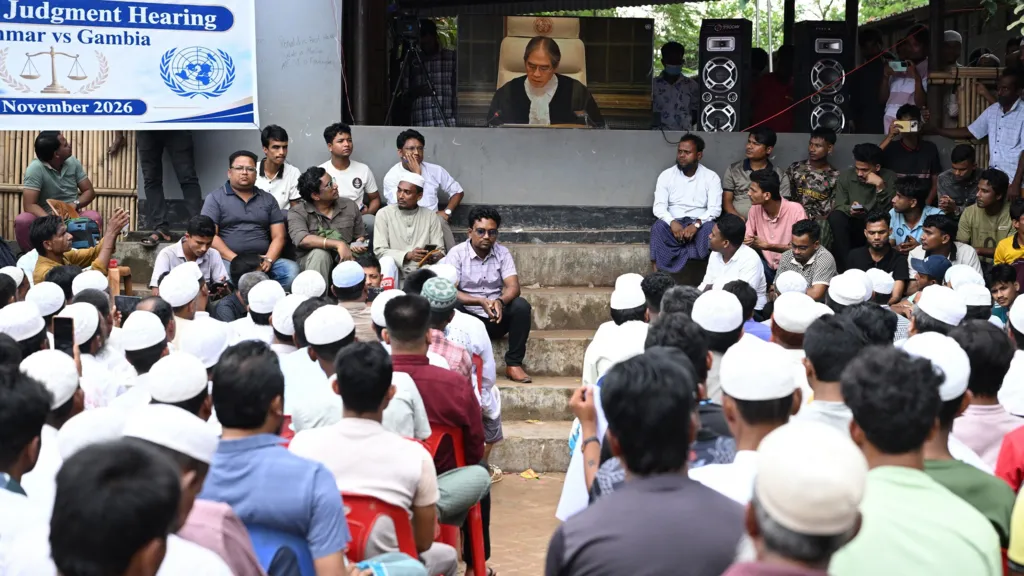
ICJ Finds Myanmar Guilty of Genocide Against Rohingya Minority
Landmark ruling links the 2017 military crackdown to genocidal intent and orders reparations for victims
The International Court of Justice (ICJ) has ruled that Myanmar committed genocide against its Rohingya minority, delivering a landmark judgment over the military crackdown that forced hundreds of thousands of people to flee the country in 2017.
In its decision delivered on Thursday, the United Nations' highest court found that Myanmar's actions demonstrated an intention to destroy a substantial part of the Rohingya population.
Presiding judge Yuji Iwasawa said the evidence showed that genocidal intent was the only reasonable conclusion that could be drawn from the events examined by the court.
The ruling was reached by a majority of nine votes to six. The judges also found that Myanmar had breached several other obligations under the 1948 Genocide Convention.
2017 Military Crackdown in Rakhine State
The case was brought by The Gambia and focused on military operations launched in 2017 in Rakhine State, western Myanmar, where a large part of the country's Rohingya Muslim population lived.
The violence followed deadly attacks by fighters from the Arakan Rohingya Salvation Army (ARSA) on more than 30 police posts. Myanmar's military subsequently launched what it described as clearance operations, backed by local Buddhist groups.
The crackdown triggered a mass displacement, with more than 700,000 Rohingya fleeing to neighbouring Bangladesh. Survivors described villages being burned, civilians being killed and women and girls being subjected to rape and other forms of sexual violence.
The ICJ determined that approximately 10,000 Rohingya were violently killed during the operations, while an estimated 815,000 people were targeted in some way.
Court Details Evidence of Widespread Abuses
In outlining its findings, Iwasawa said Myanmar's military carried out indiscriminate killings, executions of men, widespread sexual violence and extreme acts of violence against children.
The court also found that Rohingya homes were deliberately set on fire and that military personnel attacked civilians attempting to escape into Bangladesh.
It further identified efforts to destroy evidence, including the burning or disposal of bodies and the demolition of sites where violence had taken place. The court also criticised Myanmar for failing to prosecute those responsible for the abuses.
Although the judges acknowledged attacks carried out by ARSA, they found an overlap between an anti-Rohingya campaign of hate speech and the military operations. The propaganda portrayed the minority group as inferior and a threat, helping to create conditions in which violence against them became more likely.
The court also examined the wider treatment of the Rohingya before the 2017 crackdown. It found that discriminatory policies, including restrictions limiting married couples to two children, contributed to the erosion of their rights.
Myanmar Had Rejected Genocide Allegations
Myanmar had consistently denied committing genocide, maintaining that its military operations were legitimate security responses to attacks by armed militants.
During proceedings in January, government representative Ko Ko Hlaing argued that the country was not expected to stand aside while what he described as terrorist groups operated freely.
Following Thursday's judgment, Hlaing declined to comment on the court's decision.
The ICJ said Myanmar was obligated to provide proportionate reparations for the violations, although the exact amount would be determined at a later stage.
Rohingya Communities Welcome Landmark Decision
The judgment was welcomed by Rohingya communities and human rights organisations, many of which have spent years campaigning for accountability.
Mohammed Nowkim, a Rohingya refugee who was forced out of Rakhine State in 2017 and now lives in Canada, described the decision as formal recognition of the suffering endured by his people.
"The Rohingya have been waiting for justice for decades."
Human Rights Watch also welcomed the judgment, describing it as long-awaited recognition of the abuses suffered by the Rohingya.
UN human rights chief Volker Türk said the suffering, misery and humiliation inflicted on the community represented a stain on humanity's conscience. He called for the court's findings to be followed by meaningful action.
Implications for Other Genocide Cases
The decision is a significant development in international law because it marks the first time an international court has found a state responsible for committing genocide.
Although individuals have previously been convicted of genocide, establishing that a state itself acted with the intention of destroying a protected group requires a particularly high standard of evidence.
The ICJ is not a criminal court and cannot imprison military officials or directly enforce its decisions. Its judgments rely largely on political pressure and the United Nations system, including the Security Council, for implementation.
However, the ruling could influence other genocide proceedings before the court, including the case brought by South Africa against Israel over its military campaign in Gaza. Lawyers involved in the Myanmar proceedings said the judgment could provide important guidance on how evidence of genocidal intent and sexual violence is assessed.
The ruling does not determine the outcome of the separate case against Israel, which has rejected South Africa's allegations as unfounded.
UK Announces Diplomatic Action Against Myanmar
Following the judgment, UK Foreign Secretary Ed Miliband announced that the British government would expel Myanmar's defence attaché and summon the country's charge d'affaires.
He also pledged to announce further measures aimed at ensuring accountability for those responsible for the abuses. The move followed calls from a cross-party group of British lawmakers for the government to reinstate sanctions targeting Myanmar's military.
For the Rohingya, the judgment represents a major legal recognition of the atrocities committed against their community. However, securing accountability and implementing the court's decision remain significant challenges.
Source: BBC News