 Canada
 United States
 United Kingdom
 Nigeria
Ebola Burial Teams in DR Congo Face Health Risks and Community Prejudice
Workers handling victims’ bodies encounter infection risks, threats and discrimination as they support efforts to contain the outbreak
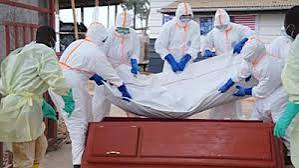
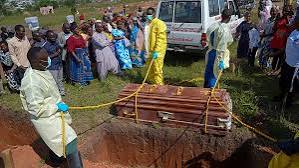
Teams responsible for safely burying people who die from Ebola in the Democratic Republic of Congo (DR Congo) are continuing their work despite the dangers of infection, threats and hostility from members of the communities they serve.
In the eastern part of the country, a dignified and safe burial team recently prepared to retrieve the body of a person who died from the disease on November 17 in Kokola, near Beni. The teams play an important role in preventing further transmission by ensuring that victims' remains are handled according to established safety procedures.
Among the workers is Chimène Mwanaki, a female team member who says she has had to confront prejudice directed at women involved in the Ebola response.
“Some people tell us that we might even kill our husbands (through contamination) or that we’ll never find anyone willing to marry us, because they think we’re the ones spreading Ebola—even though that’s not the case,” Mwanaki said.
A Deadly Outbreak Continues to Spread
Six months after the outbreak was declared, health authorities and response organisations are still struggling to bring the situation under control.
Government figures indicate that more than 11,000 cases have been recorded, with nearly half of those infected losing their lives. The outbreak is described as the deadliest in the country's history and is on course to exceed the death toll of the West African Ebola epidemic, which claimed approximately 11,000 lives between 2014 and 2016.
The virus had already caused 43 deaths by the time the outbreak was officially announced in mid-May, indicating that it may have been circulating undetected for a considerable period. It has since reached eight of DR Congo's 26 provinces, while new hotspots continue to place additional pressure on an already overstretched healthcare system.
Local Teams Support Safe Burial Efforts
To reduce the risk of further infections, the Dignified and Safe Burial (DSB) programme has established community-based groups to handle deaths in locations without permanent DSB teams.
These local groups are known as ECUMAIR, meaning Community Teams for Dignified and Safe Burial. Their responsibility is to ensure that people who die in affected communities are buried safely, helping to interrupt the chain of transmission.
Jean Manina, a supervisor of DSB teams in the Oicha health zone, recently visited the local team in Erengueti to assess its activities and ensure that members were following the required burial procedures.
Particular attention is given to the removal of protective equipment, a stage that can expose workers to infection if safety protocols are not properly followed.
“Every day, the first thing I do is check the dashboard. If we have an alert from a health zone where we have an ECUMAIR team, I have to go out there to see how they’re doing their work,” Manina explained.
He added that where local ECUMAIR teams are unavailable, a mobile team based in the area is deployed to respond to reported cases.
Threats and False Accusations Against Workers
Beyond the danger of contracting the virus, burial workers also face threats from some residents who accuse them of mishandling or mutilating the bodies of deceased people.
These accusations are linked in part to the collection of samples from bodies to determine whether Ebola was responsible for a person's death. Although the procedure is part of efforts to identify infections and prevent further spread, it has sometimes triggered hostility against response teams.
Workers also report facing suspicion and criticism within their own neighbourhoods. Manina said some residents believe that people involved in the response are benefiting financially while helping foreign organisations, particularly Westerners, at the expense of local communities.
“When we’re at home, our neighbours tell us: ‘You’re part of the response, so you’re making money. You’re making it easier for white people (Westerners) to kill our fellow citizens.’ And yet that’s not true—we’re fighting to break this chain (of Ebola transmission),” Manina said.
Despite the physical dangers, limited time with their families and the hostility they encounter, the burial teams remain part of the frontline effort to prevent further Ebola infections and protect communities across eastern DR Congo.
Source: Africanews, with AP