 Canada
 United States
 United Kingdom
 Nigeria
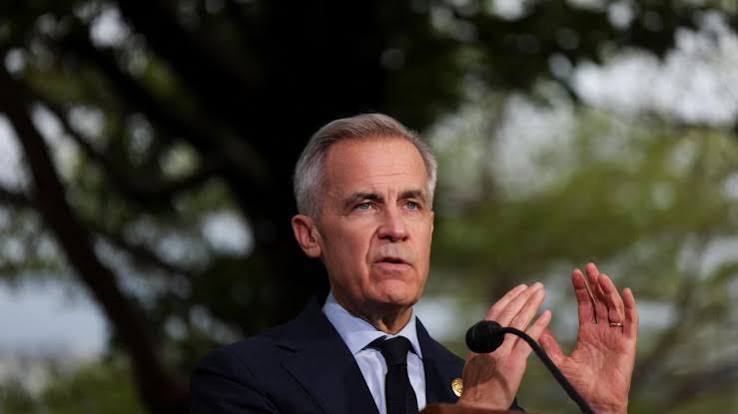
Carney Says Canada Will Pursue Other Trade Opportunities if US Deal Fails
Ottawa continues to seek an agreement with Washington while strengthening economic partnerships across Europe and Asia
Canadian Prime Minister Mark Carney has said his country is prepared to reach a mutually beneficial trade agreement with the United States but will continue pursuing alternative economic partnerships if Washington is unwilling to reach an agreement.
Speaking virtually from China at the DealBook Summit on Wednesday, Carney said negotiations with the US were still facing several unresolved issues, despite some progress. He indicated that both countries had yet to reach an agreement that could be formally signed.
His comments came after a meeting with US President Donald Trump on the sidelines of the Asia-Pacific Economic Cooperation (APEC) summit in Shenzhen, China. Carney described their conversation as relatively direct, although it did not produce a major breakthrough in the ongoing trade discussions.
"We'd like to do a deal. If the U.S. doesn't want to do a deal, we're busy," Carney said.
Canada Expands Trade Partnerships
With the outcome of negotiations with Washington still uncertain, Carney said Canada's discussions with China had progressed exceptionally well. He described the engagement as practical and said it had delivered significant opportunities for Canadian exports.
Under the arrangement, Canada secured improved market access for some of its commodities while agreeing to allow a limited number of Chinese electric vehicles into its market at reduced tariff rates.
Carney's Asian trade mission also produced two free trade agreements with the Philippines and the 11-member Association of Southeast Asian Nations (ASEAN) bloc. Together, the markets represent an economy valued at approximately $6 trillion.
He also said Canada was approaching a free trade agreement with India, which he expects could be concluded within the next three months.
According to the prime minister, Canada's existing free trade arrangements provide access to economies representing about two billion people. He expects that figure to increase to three billion as additional agreements are secured.
Carney Calls for Changes in US Trade Policy
Carney also addressed whether the outcome of the US midterm elections, in which Democrats won majorities in both chambers of Congress, would affect Canada's relationship with Washington.
He said the election results alone would not change the situation, arguing that improvements would depend on concrete changes to US trade policies affecting Canadian industries.
"What will change views is policy decisions that are taken and that will stick," Carney said. "It will take action as opposed to intent."
The Canadian leader said his government was seeking a lasting shift in the country's economic relationships rather than returning to a situation of increasing dependence on the United States.
He maintained that Canada should not be pressured or placed in a subordinate position by any major power, including its southern neighbour.
Economic Diversification and National Sovereignty
Carney said his broader trade strategy, which includes strengthening ties with the European Union and improving relations with China, is aimed at protecting Canada's long-term economic independence and sovereignty.
He acknowledged that moving towards a more diversified trade system would not be straightforward and that the transition would present challenges.
However, his position signals that Ottawa intends to keep expanding its international trade relationships while leaving the door open for an agreement with Washington if mutually acceptable terms can be reached.
Source: CBC News