 Canada
 United States
 United Kingdom
 Nigeria
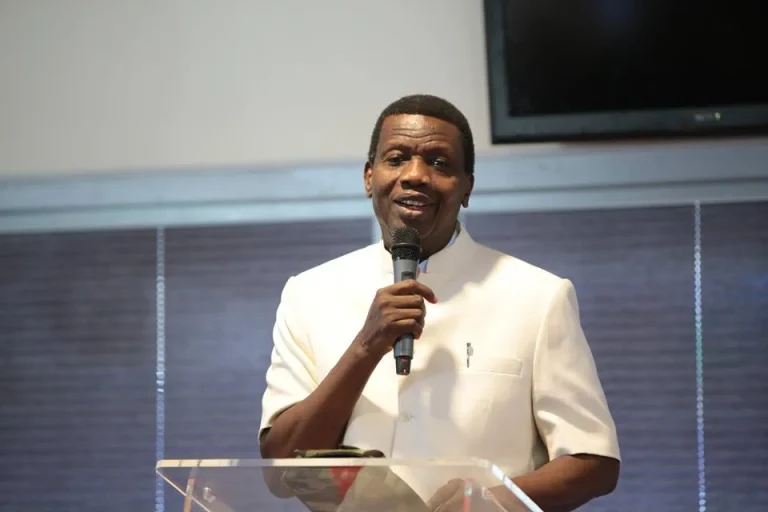
The General Overseer of the Redeemed Christian Church of God (RCCG), Pastor Enoch Adeboye, has denied claims that he carried a placard in protest against former President Goodluck Jonathan, insisting that the incident occurred in 2020 during a prayer walk against insecurity in Nigeria.
Adeboye addressed the issue on Sunday during the church's November Thanksgiving service, accusing journalists of misrepresenting the date and purpose of the exercise.
Adeboye Explains the Prayer Walk
The cleric acknowledged carrying a placard but said the exercise was organised for prayers against killings and insecurity, not as a political protest against Jonathan.
He explained that the prayer walk followed a directive for churches to organise similar activities around their premises. According to him, the event took place in 2020, five years after Jonathan left office in May 2015.
Adeboye criticised reports linking the photograph to Jonathan's administration, saying the publication had distorted the circumstances surrounding the incident without proper verification.
What Happened During the 2020 Walk?
On February 2, 2020, Adeboye led members of the RCCG on a prayer walk in Lagos to express concern over killings and insecurity across the country.
The exercise followed a three-day fasting and prayer programme declared by the Christian Association of Nigeria to seek divine intervention against terrorism and other security challenges.
Reports at the time said the procession began at the RCCG national headquarters in Ebute Meta, moved towards Atan Cemetery in Yaba and returned to the church. Photographs showed Adeboye carrying a placard with the inscription, “All Souls Are Precious to God.”
The event took place during the administration of former President Muhammadu Buhari, who succeeded Jonathan in May 2015.
Cleric Calls for Proper Fact-Checking
Adeboye also used the occasion to remind journalists of the importance of investigative journalism and verifying information before publication.
Recounting his exposure to journalism studies in the 1960s, he said reporters should investigate the circumstances surrounding a story rather than rely on appearances or unverified claims.
He expressed disappointment that the report had circulated without adequate checks, urging members of the creative industry to uphold accuracy and responsible reporting.
Punch Newspapers