 Canada
 United States
 United Kingdom
 Nigeria
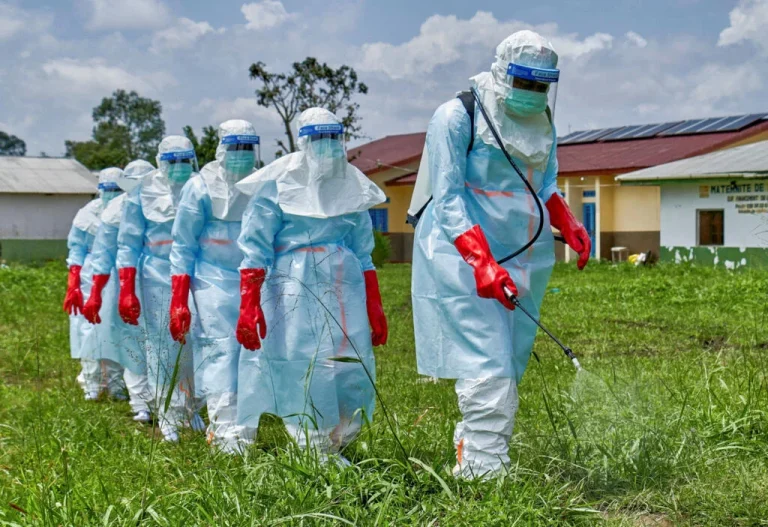
The World Health Organisation (WHO) has confirmed that all 62 contacts linked to Nigeria’s imported case of Bundibugyo virus disease have completed 21 days of monitoring without any secondary transmission.
WHO Director-General, Tedros Ghebreyesus, disclosed this in a statement posted on his X handle on Friday, congratulating the Nigerian government, health workers and responders for containing the spread of the virus.
He described the development as a significant milestone in Nigeria’s response to the case reported on October 20, while noting that the country was entering the second half of the 42-day countdown.
“A positive milestone in Nigeria’s Ebola response: all 62 identified contacts of the case reported on 20 October have completed 21 days of monitoring, with no secondary transmission detected,” Tedros said.
All 62 contacts complete monitoring
The WHO chief’s statement followed a briefing by the Nigeria Centre for Disease Control and Prevention (NCDC), where its Director-General, Jide Idris, announced that the last contact completed the monitoring period and was discharged on November 13.
Idris said 13 of the contacts reported fever or other non-specific symptoms during the monitoring period, but all tested negative for the virus.
He said none of the contacts developed the disease, confirming that there had been no transmission from the index case.
“Today, we announce an important milestone in our national response to the imported case of Bundibugyo virus disease.
“The 21-day monitoring period for all 62 identified contacts has been completed with the last contact discharged today.
“We are glad to announce that none of the contacts became ill, meaning no transmission from the index case,” Idris said.
Nigeria maintains outbreak vigilance
Despite the milestone, Idris cautioned that completing the contact monitoring period did not mean the outbreak had formally ended.
He said Nigeria remained vigilant amid ongoing Ebola transmission in the Democratic Republic of the Congo, adding that the NCDC’s National Emergency Operations Centre remained activated at Level 3.
Tedros also assured that the WHO would maintain its support and heightened vigilance as Nigeria continued its response.
How the imported case was detected
The imported case was confirmed on October 20 after a 42-year-old woman who had travelled from Uganda arrived in Abuja on October 3 through Addis Ababa, Ethiopia.
She developed symptoms on October 7 and was admitted to a private health facility on October 11. The NCDC was notified on October 19, and laboratory tests confirmed the infection the following day.
The patient was evacuated to Switzerland on October 26 for further medical care. She recovered and was discharged from hospital on November 11.
Punch Newspapers