 Canada
 United States
 United Kingdom
 Nigeria
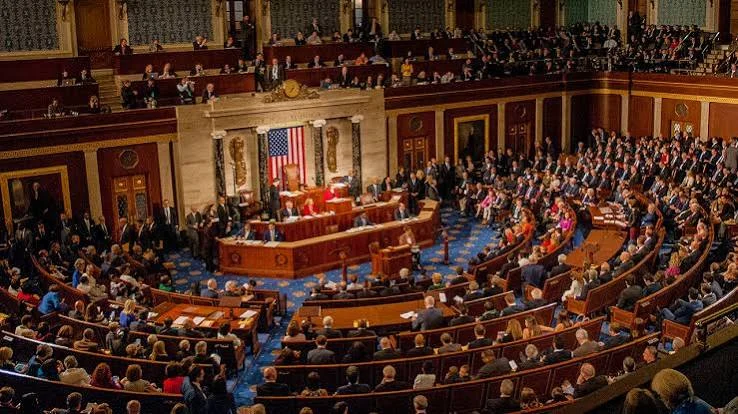
The United States has said Nigeria has not made sufficient progress in addressing attacks on Christian communities, warning that the country's designation as a Country of Particular Concern (CPC) should remain in place.
Assistant Secretary of State for African Affairs, Frank Garcia, made this known during a congressional hearing on violence in Nigeria on Thursday, while responding to questions from US Congressman Riley Moore.
US Raises Concerns Over Security Response
During the hearing, Moore questioned the Nigerian government's efforts to dismantle militia strongholds and kidnapping camps in the Middle Belt, particularly in Benue and Plateau states.
He also asked what operations had been carried out since US Under Secretary of State for Political Affairs, Allison Hooker, raised concerns about the pace of Nigeria's response in August.
The congressman further questioned why Benue and Plateau were excluded from the 10 states covered by Nigeria's new forest guard initiative, despite persistent attacks in the areas. He also noted that 1,000 presidentially approved guards for Plateau State had yet to be deployed.
Moore argued that Nigeria had not done enough to address the violence and insisted that the country should not be removed from the CPC list.
Responding, Garcia acknowledged that progress had been insufficient, although he said the Nigerian government was taking steps to address the concerns.
He explained that the measures had yet to produce the desired impact, adding that the US was monitoring Nigeria's commitments through the US-Nigeria Joint Working Group.
US Says Security Efforts Are Not Yet Effective
Garcia described Nigeria's current position as one of building security capacity, but expressed concern that the capacity was not being deployed effectively or quickly enough.
He acknowledged US-supported counterterrorism operations in the Lake Chad Basin but said those efforts had not necessarily addressed the activities of Fulani militants operating across the Middle Belt.
In his prepared testimony, Garcia said the administration of President Donald Trump had prioritised the persecution of Christians in Nigeria since the country was redesignated a Country of Particular Concern on October 31, 2025.
He cited attacks on Christian communities in Kaduna State on July 27 and killings in Plateau State in August and September, saying the violence had continued despite diplomatic engagements.
Washington Outlines Measures to Pressure Nigeria
Garcia said the US-Nigeria Joint Working Group had held its first meeting in Abuja in January and another in Washington in August. The engagements, he explained, were aimed at encouraging increased security deployments in vulnerable communities, faster responses to early warnings and accountability for perpetrators.
He added that the US had provided training and equipment to police units responsible for protecting vulnerable communities through its Bureau of International Narcotics and Law Enforcement Affairs.
Washington had also expanded biometric information-sharing with Nigeria to help identify and prosecute those responsible for attacks. Garcia said the US was working with Nigerian financial institutions on an action plan to disrupt terrorist financing networks allegedly funding attacks on churches.
He further disclosed that Hooker had raised concerns about civilian casualties, the safe and voluntary return of internally displaced persons and transparency in humanitarian aid delivery during the group's second meeting.
However, Garcia acknowledged that Nigeria's security architecture remained stretched and that access to justice in some parts of the Middle Belt was limited.
He said the US would continue using diplomatic engagements, the CPC designation and targeted security cooperation to press for the protection of Christian communities and accountability for those responsible for attacks.
Federal Government Rejects Genocide Claims
The Nigerian Federal Government has consistently rejected claims of a Christian genocide or targeted religious persecution in the country.
It maintains that the widespread violence is driven by broader security challenges, including banditry, terrorism and resource-related conflicts, which affect citizens across religious lines.
Punch Newspapers