 Canada
 United States
 United Kingdom
 Nigeria
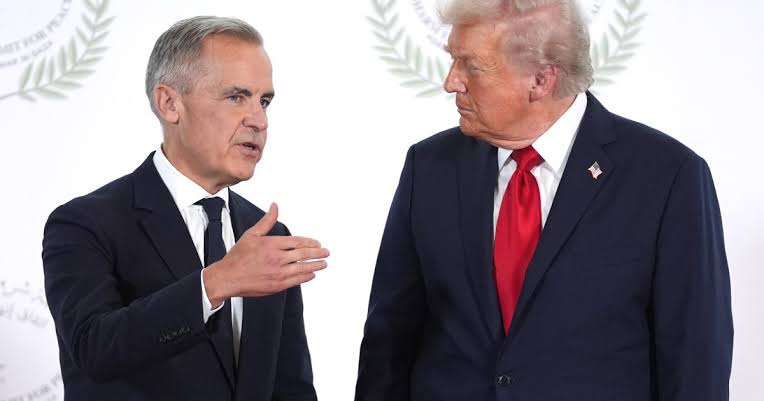
United States Ambassador to Canada, Pete Hoekstra, has predicted that Washington and Ottawa could reach a trade agreement before the end of 2026, although he does not expect recent US midterm election results to significantly influence negotiations.
Hoekstra, appointed by President Donald Trump, made the prediction during an interview with commentary outlet Northern Perspective, saying Canadian Prime Minister Mark Carney and Trump understood what they wanted from a potential agreement but still had differences to resolve.
Midterm Results Unlikely to Change Trade Policy
Asked whether a Democrat-controlled Congress would influence negotiations, Hoekstra said he did not believe the election outcome would change the President's approach to trade.
Democrats recently secured majorities in both chambers of Congress, the House of Representatives and the Senate, in a significant electoral victory.
Several Democratic lawmakers have criticised Trump's tariffs on Canadian imports, particularly in states whose economies depend heavily on trade with Canada.
Michigan Senator-elect Abdul El-Sayed, who won a race in the state's auto-manufacturing region, described the trade war as “insane” during a post-election interview with CNN.
In Maine, tariffs also featured prominently during the Senate campaign, with the Democratic winner criticising the Republican incumbent for not challenging Trump's trade measures more forcefully.
Canadian Prime Minister Mark Carney said on Friday that Canada would welcome any moves to restore free trade, describing it as beneficial to families and workers in both countries.
Trump Retains Significant Tariff Powers
Despite Democratic control of Congress, analysts say the election results may have limited influence on Trump's trade agenda because the executive branch holds substantial authority over trade policy.
Blake Harden, managing director for trade policy at Ernst & Young's Washington Council office, told Reuters that the change in congressional control was unlikely to significantly affect the President's tariffs.
Democrats could introduce legislation after taking control of Congress in January to limit some of the tariffs. However, any bill opposed by Trump could face a presidential veto.
Overriding such a veto would require a two-thirds majority in both chambers, equivalent to 290 votes in the House of Representatives and 67 in the Senate. Democrats would therefore need substantial Republican support.
They would also need at least 60 votes in the Senate to overcome a filibuster and advance proposed legislation.
With the political and economic disagreements still unresolved, Hoekstra's prediction of a deal before the end of 2026 will depend on whether the two governments can bridge their remaining differences.
CTV News / Reuters / The Canadian Press