 Canada
 United States
 United Kingdom
 Nigeria
U.S. Senator Urges Canada to Accept Interim Tariff Deal as Democrats Promise Better Long-Term Terms
Chris Coons says an initial agreement could provide a foundation for Congress to pursue further tariff relief
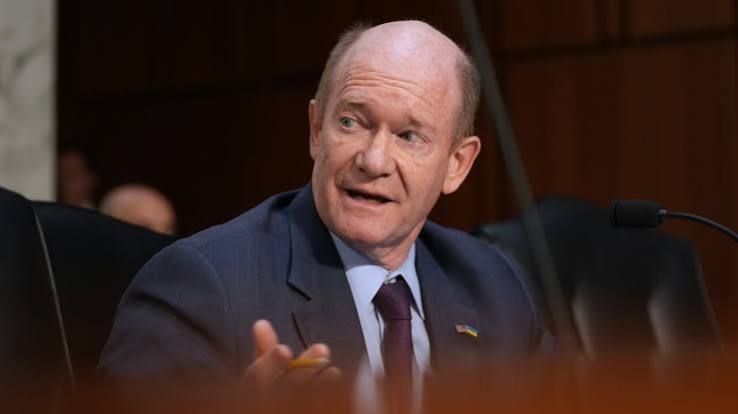
A senior Democratic senator in the United States has urged Canada to consider an interim trade agreement with President Donald Trump's administration, saying a future Democratic-led Congress could work towards securing more favourable long-term terms.
Senator Chris Coons of Delaware said Ottawa should take advantage of any opportunity to reduce or eliminate existing U.S. tariffs while leaving room for Congress to pursue a broader arrangement after Democrats assume control of both chambers in January.
Canada is currently seeking an interim agreement that would ease tariffs affecting major export sectors, including steel, aluminium, automobiles and lumber.
Coons Supports an Interim Agreement
Speaking on CBC's Power & Politics, Coons said an agreement that removes the recently introduced Section 338 tariffs would represent a significant achievement for Canada.
He encouraged the Canadian government to accept a workable interim arrangement rather than delay progress while waiting for a more comprehensive deal.
"Frankly, if you can get an interim deal, I'd take it, and then put it to us in the new majority to legislate an even better deal," Coons said.
The senator's comments come after the Republican Party suffered significant losses in the U.S. midterm elections, paving the way for Democrats to take control of the Senate and House of Representatives in January.
Some Democrats have indicated that they intend to challenge the tariffs imposed on Canadian goods once the new Congress takes office.
Senator Criticises National Security Justification
In a separate interview with CBC Radio's The House, Coons said removing tariffs on Canadian products was also among his priorities, although he acknowledged that not every Democrat would support eliminating all duties.
He pointed out that lawmakers representing steel-producing states could push to retain some tariffs on steel and aluminium, noting that similar disagreements arose during former president Joe Biden's administration.
Coons also criticised the use of national security arguments to justify tariffs on Canadian imports under Section 232, describing the measures as unfair to a close U.S. ally.
"For us to impose and maintain Section 232 tariffs on Canadian imports is an insult to Canada. They should be removed," he said.
Canada Seeks Relief Across Key Industries
Canada's Trade Minister Dominic LeBlanc said the government is pursuing an interim arrangement that would reduce tariffs imposed under Section 232 and eliminate those introduced under Section 338.
Section 232 covers duties affecting steel, aluminium, automobiles and lumber, while the Section 338 tariffs came into effect in September.
LeBlanc said an interim agreement could also open the way for formal discussions on reviewing the Canada-United States-Mexico Agreement (CUSMA), which provides the framework for trade among the three countries.
According to the minister, U.S. officials have indicated that an arrangement on the two tariff measures could create an opportunity to begin the review process already provided for under CUSMA.
However, LeBlanc cautioned that Canada should not expect a complete removal of U.S. tariffs. He noted that trade arrangements reached by other countries have also retained some level of duties.
Ottawa's immediate objective is to reduce the tariffs enough to help affected Canadian industries remain competitive internationally.
Ottawa Says Negotiations Will Not Be Rushed
Canadian officials are hoping to reach an interim arrangement before the end of the year, partly to address the threat of a further tariff increase on Canadian automobile exports scheduled for January 1.
LeBlanc, however, stressed that the proposed year-end target is not a strict deadline. He said the government would continue negotiations into January or February if necessary to secure better terms for Canada.
The minister also warned against assuming that the Democrats' return to control of Congress would automatically end the tariffs.
For Canada, the immediate challenge is to secure meaningful relief while preparing for a broader trade negotiation. Coons' proposal offers a possible path forward, but the extent of any future tariff changes will depend on negotiations with the Trump administration and the position Congress eventually takes.
Source: CBC News