 Canada
 United States
 United Kingdom
 Nigeria
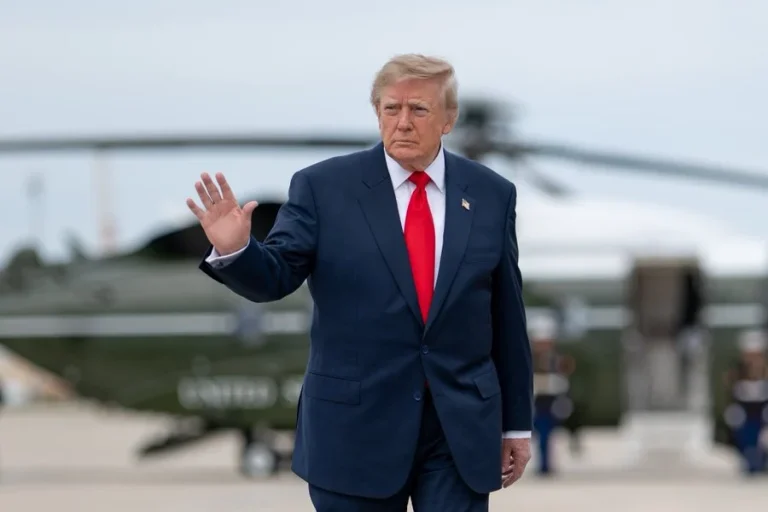
Trump Urges Putin to Halt Military Aggression Across Europe
US president says restraint could help secure an agreement to end the war in Ukraine
US President Donald Trump says he has asked Russian President Vladimir Putin to withdraw military aggression against territories across Europe, expressing hope that the move could help bring an end to the war in Ukraine.
Trump disclosed the request in a post on his Truth Social platform on Thursday, saying he raised the issue during his meeting with Putin in China the previous week.
According to the US president, he spent considerable time discussing the need for Russia to stop military actions across European territories as part of efforts to reach a peace agreement.
“During my conversations in China with President Vladimir Putin of Russia, I spent a lot of time talking about the fact that I would like to see President Putin pull back all Military aggression against territories throughout Europe,” Trump wrote.
He said the request was made in the hope that Russia and Ukraine could reach an agreement quickly, adding that thousands of people were being killed every month in what he described as a complete bloodbath.
However, Trump's statement did not identify the specific European territories he was referring to or explicitly mention Ukraine.
Comments Follow Meeting With NATO Chief
The remarks came a day after Trump hosted NATO Secretary-General Mark Rutte in Florida. Following their meeting, both leaders issued a joint statement urging Russia to avoid actions that could widen the conflict in Ukraine.
The statement emphasised the importance of preventing any Russian move, whether deliberate or accidental, from expanding the war.
Trump later reposted the joint statement on Truth Social before publishing his comments about the conversation with Putin.
European governments have become increasingly concerned about what they consider Russian provocations. The report cited three Russian cruise missiles that landed in Poland the previous week as one example of the security concerns facing the region.
Trump's latest remarks also differed from some of his recent comments criticising Ukraine for carrying out strikes against targets deep inside Russian territory. In his latest statement, he did not make a similar call for restraint from Kyiv.
Trump's Relationship With Putin Under Scrutiny
The statement represents a shift in tone from Trump's public interaction with Putin during their meeting in China's Shenzhen city the previous week.
At the time, Trump welcomed the Russian leader warmly, describing him as a friend before the two exchanged handshakes. The remark raised fresh concerns in Ukraine and several European capitals about the US president's approach to Moscow.
Trump has previously faced criticism for comments perceived as placing greater responsibility on Ukraine for the conflict. His relationship with Ukrainian President Volodymyr Zelensky has also been strained, particularly following their heated exchange at the White House in February 2025.
Kushner Says Territorial Dispute Remains a Major Obstacle
Trump's special envoys on the Ukraine conflict, his son-in-law Jared Kushner and business associate Steve Witkoff, have also faced criticism over what some observers describe as an approach favourable to Moscow.
Speaking on the German MD Meets Podcast on Wednesday, Kushner said Putin had demonstrated restraint by agreeing not to use nuclear weapons.
He described the Russian president as a “grandmaster of politics” and characterised the conflict as a proxy war in which European countries were funding and arming Ukraine against Russia.
However, Kushner acknowledged that territorial disagreements in eastern Ukraine remained a major obstacle to negotiations.
“What Steve and I have deciphered from having many, many hours with President Putin and from the Russian team, is that you know the territorial issue is right now a little bit of a deadlock,” he said.
He also warned that a miscalculation could cause the conflict to escalate significantly, highlighting the risks of further deterioration in the war.
Despite the latest diplomatic exchanges, the dispute over territory and the wider security concerns across Europe remain major challenges to efforts aimed at securing a lasting settlement.
Source: PUNCH