 Canada
 United States
 United Kingdom
 Nigeria
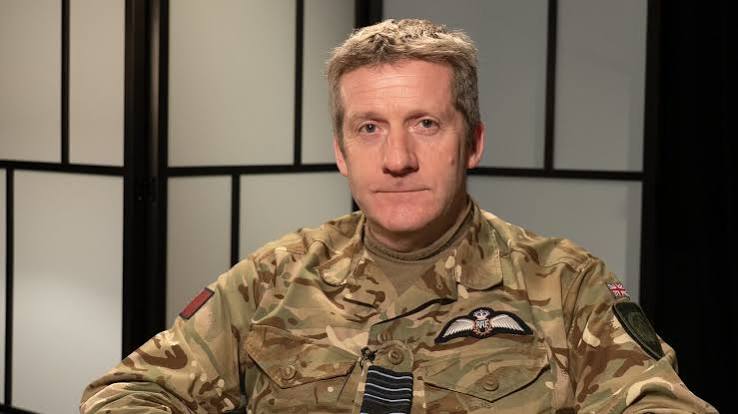
NATO Deputy Commander Praises Canada’s Defence Investments Amid Pentagon Criticism
Air Chief Marshal John Stringer highlights Canada's military contributions and ongoing efforts to rebuild its forces
NATO's deputy commander, British Air Chief Marshal Sir John Stringer, has praised Canada's contribution to the alliance's security operations in Europe and its efforts to strengthen its military capabilities, offering a more positive assessment than recent criticism from the Pentagon.
Speaking in an interview with CBC News in Ottawa on Wednesday, Stringer said Canada was rebuilding its investments across its air, land and maritime forces while maintaining a significant military presence in Europe.
His comments come amid growing tensions between the United States Department of War and the Canadian government led by Prime Minister Mark Carney over defence spending, military readiness and Canada's commitments to NATO and the North American Aerospace Defense Command (NORAD).
NATO Commander Highlights Canada's Role
Asked about Washington's criticism of Canada's defence investment, Stringer declined to comment directly on the position of other countries but pointed to Canada's military deployment in Eastern Europe as evidence of its contribution.
“What I do look at in Canada now is a nation putting significant forces into Europe, most obviously, but not exclusively the multinational brigade in Latvia. I look at a nation that is recapitalizing its investments in its forces.”
Canada currently has approximately 2,200 troops in Latvia, with plans to increase the number to 2,600 in the near future. It also leads the 3,000-member NATO multinational brigade stationed in the country.
Prime Minister Carney recently extended Canada's commitment to the deployment until 2031. According to the federal budget, the contribution to Operation Reassurance is expected to cost approximately $7 billion over that period.
Stringer said Canada was among several NATO members rebuilding military capabilities after years of relatively low defence spending following the end of the Cold War.
“I look at Canada as one of those nations that's spending well.”
Pentagon Questions Canada's Military Readiness
The NATO official's remarks contrast with recent statements from senior US defence officials, who have accused Canada of failing to provide sufficient resources for its military commitments.
In a background briefing, one Pentagon official described the difference between Canada's public commitments and its actual military capacity as particularly wide. The official argued that Canada's NORAD obligations were not supported by adequate investment and that the country's military readiness remained below expectations.
The Pentagon also released a fact sheet criticising Canada's defence planning, pointing to equipment modernisation delays, readiness figures and what it described as a lack of focus in military spending.
US officials warned that Washington could consider significant measures to reduce the burden on American forces and taxpayers if Canada did not give greater priority to continental defence.
Stringer, however, said Canada was not alone in facing military readiness challenges, noting that several NATO members were working to rebuild capabilities after years of reduced investment.
Military Readiness Challenges Across NATO
The debate over Canada's military preparedness comes as other alliance members, including the United States, face difficulties maintaining the operational readiness of their armed forces.
A report submitted to the US Congress by the Government Accountability Office in March found that American military readiness had declined over the previous two decades. In 2024, 25 of 27 types of US Army and Air Force aircraft failed to meet their operational availability targets.
A separate audit published in June found that the mission-capable rate of the American F-35 fleet had fallen from 67 per cent in 2021 to 44 per cent in the previous year. Only 25 per cent of the aircraft were considered capable of carrying out all their assigned missions.
Senior US Navy officials also reported that readiness across their ships, submarines and aircraft ranged between 67 and 70 per cent.
Other NATO countries face similar difficulties. Britain has withheld detailed readiness figures on national security grounds, while parliamentary research indicated that its military branches were below their trained personnel targets. France has also limited the publication of readiness data, and Germany classifies detailed equipment figures.
Stringer said these challenges were not unique to Canada and stressed that improving readiness remained an ongoing priority for the alliance.
Carney Responds to US Criticism
Canadian Prime Minister Mark Carney also addressed the disagreement, saying his recent conversations with US President Donald Trump had focused on resolving conflicts around the world rather than the defence spending concerns raised by Pentagon officials.
Carney maintained that Canada was taking responsibility for its security and contributing to NATO's defence through its deployment in Latvia and cooperation with European allies, including Nordic countries, Germany and France.
He also highlighted Canada's role in strengthening security across the Arctic region, an area of growing strategic importance to both Canada and its NATO partners.
NATO Focuses on Russian Military Activities
Beyond the disagreement over defence spending, Stringer said NATO's military leadership remained focused on Russia's increasing use of what is known as grey-zone warfare, which includes activities designed to create pressure and uncertainty without triggering a conventional military confrontation.
His comments followed reports that three Russian KH-101 cruise missiles crashed in southeastern Poland during a large-scale overnight attack on Ukraine. The incident caused no reported injuries or infrastructure damage. One of the missiles came down approximately 35 kilometres from an area where troops from 11 NATO countries were conducting military exercises.
Polish Prime Minister Donald Tusk described the airspace incident as an intentional provocation by Russia. Stringer, however, said investigations were still ongoing and that it was too early to determine whether the missiles entered Polish territory deliberately or accidentally.
He warned that NATO needed to respond carefully to such incidents, arguing that an excessive reaction could serve Russia's interests.
“What we need to do is be calm and measured and resolute in the approach to provocations. And by the way, not every military act needs, even warrants, some form of military response.”
Stringer's assessment highlights the different perspectives within the Western alliance on Canada's defence commitments, as NATO members continue to face pressure to strengthen their military capabilities and respond to evolving security threats.
Source: CBC News