 Canada
 United States
 United Kingdom
 Nigeria
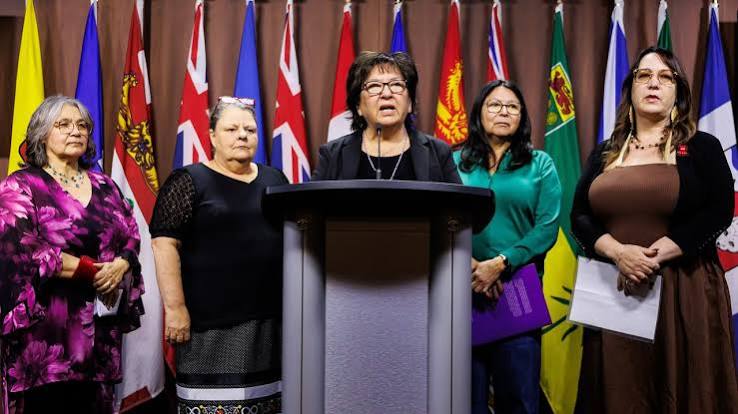
Indigenous women leaders in Canada have criticised the federal government's 2026 budget, saying it fails to adequately address the safety, housing and social challenges facing Indigenous women, particularly those living in remote and northern communities.
The leaders raised their concerns during a news conference in Ottawa on Thursday, arguing that the more than 500-page budget does not sufficiently reflect their realities or involve Indigenous women in decisions affecting their communities.
Josie Nepinak, president of the Native Women's Association of Canada, described the budget as a missed opportunity to make the safety and healing of Indigenous women a sustained national priority.
She was joined by representatives of Indigenous women's organisations, including Pauktuutit Inuit Women of Canada, Les Femmes Michif Otipemisiwak, Femmes Autochtones du Québec and the Ontario Native Women's Association.
Inuit Women Say Their Needs Were Overlooked
Rose Mary Cooper, former executive director of Pauktuutit Inuit Women of Canada, said the budget does not adequately recognise the dangers facing Indigenous women in northern and remote communities. She noted that Inuit women were not mentioned in the document.
Cooper explained that many communities in Inuit Nunangat can only be accessed by air, making access to emergency support and safe accommodation particularly difficult. She said about 60 per cent of these communities have no shelters or other safe spaces.
She argued that when Indigenous women flee violence, they often have to leave behind their families, language, land and communities. According to her, policies designed around major cities cannot adequately serve small, remote communities where food and housing costs are significantly higher.
Cooper called for solutions tailored to the locations and circumstances of Indigenous women, with affected women taking the lead in designing the interventions.
Violence and Homelessness Remain Major Concerns
The leaders highlighted statistics showing the disproportionate impact of violence on Indigenous women. According to Statistics Canada, one in six Indigenous women has experienced at least one form of intimate partner violence.
Federal data also indicate that although Indigenous women account for approximately five per cent of all women in Canada, they represented about 26 per cent of women killed by an intimate partner in 2022.
The advocates also questioned the government's plan to end homelessness within 10 years, saying it would require stronger collaboration with organisations working directly with Indigenous communities.
Cora McGuire-Cyrette, chief executive officer of the Ontario Native Women's Association, said most Indigenous women live off-reserve in rural and urban communities, citing a 2024 study that put the figure at 83 per cent.
She argued that the budget was largely silent on support for urban Indigenous agencies, with much of the investment directed towards services on reserves.
Leaders Acknowledge Funding Commitments but Demand More
Prime Minister Mark Carney's budget pledges $50 billion over 10 years for Indigenous programmes and services, including $32 billion for First Nations housing and infrastructure.
The budget also provides $575 million over five years for the Inuit Child First Initiative and its transition to the Inuit-led Pirutsiagutiit programme.
However, Inuit and Métis organisations have expressed disappointment over the limited recognition of their specific priorities. Inuit Tapiriit Kanatami said it welcomed the funding for the child initiative but was concerned about the lack of specific references to Inuit in other parts of the budget.
Meanwhile, Métis leaders have criticised the absence of dedicated funding for their communities, with Manitoba Métis Federation President David Chartrand expressing strong disappointment over the provision.
Red Dress Alert Funding Welcomed, Prevention Still Needed
One provision welcomed by the Indigenous women's leaders is the allocation of $3.6 million to renew the Red Dress Alert pilot programme, developed with Indigenous partners to address the crisis of missing and murdered Indigenous women and girls.
However, Nepinak said the funding, although important, does not address all the gaps in safety and protection facing Indigenous women.
McGuire-Cyrette also welcomed the investment but argued that it focuses more on responding after violence has occurred than preventing it. She called for greater investment in early intervention and support systems.
Cooper said the specific needs of women living in Inuit Nunangat must also be considered in implementing the programme.
Lisa Pigeau, director of intergovernmental relations for Les Femmes Michif Otipemisiwak, said addressing gender-based and orientation-based violence requires a coordinated approach involving multiple government ministries.
The leaders said they had raised the need for stronger support and investment with Crown-Indigenous Relations Minister Rebecca Alty before the budget was presented and were looking forward to further discussions with relevant ministers.
CBC News