 Canada
 United States
 United Kingdom
 Nigeria
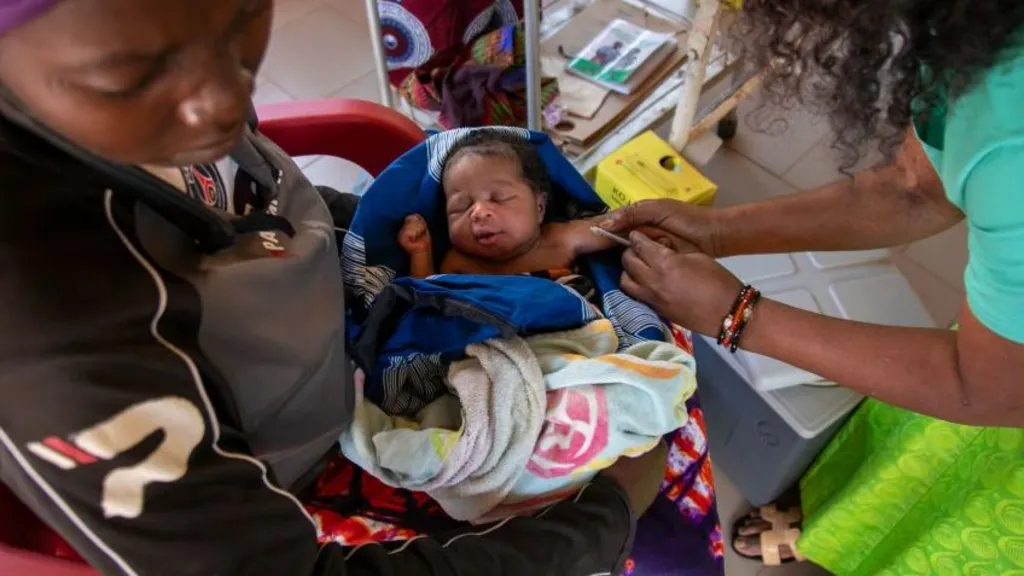
Guinea-Bissau has cancelled a proposed US-funded clinical trial of a hepatitis B vaccine on newborn babies following widespread criticism over its ethical implications.
The proposed study, which was funded by the United States government under Health Secretary Robert F. Kennedy Jr., faced accusations of being unethical and neocolonial because it planned to withhold a World Health Organization (WHO)-recommended vaccine from half of the participating infants.
The controversy also prompted Guinea-Bissau's Judicial Police to seize a batch of hepatitis B vaccines from the research centre involved in the proposed trial.
What the Proposed Trial Involved
The study was planned at the Bandim Health Project, a research centre that has operated in Guinea-Bissau since 1978.
It was designed to involve 14,000 newborns, with half receiving the hepatitis B vaccine shortly after birth and the other half not receiving it as part of the research.
Researchers said the objective was to investigate whether the birth-dose vaccine has broader health effects beyond preventing hepatitis B infection.
The research team cited previous studies in The Gambia and Guinea-Bissau that raised questions about a possible association between the vaccine and increased mortality. They also argued that Guinea-Bissau offered an opportunity to study the vaccine before its planned introduction into routine newborn immunisation in 2028.
The US Centers for Disease Control and Prevention (CDC) awarded the University of Southern Denmark (SDU) $1.6 million in December 2025 to fund the proposed research.
WHO Raises Ethical Concerns
The WHO representative in Guinea-Bissau, Walter Kazadi Mulombo, said the organisation became concerned after receiving questions about the study and discovering that its protocol was not publicly available.
He argued that withholding a vaccine already proven to protect newborns against hepatitis B would be unethical.
According to the WHO, the vaccine has been used for more than 30 years in over 115 countries. It protects babies from infection during childbirth and other possible exposure later in life.
Nearly one-fifth of Guinea-Bissau's population is estimated to be infected with hepatitis B, a viral disease that affects the liver. People infected during infancy face a particularly high risk of developing chronic infections, which can lead to liver failure or cancer.
Although Guinea-Bissau currently administers the vaccine to children at six weeks, the WHO says giving it shortly after birth offers better protection against infection passed from mother to child.
Mulombo said the government had been considering introducing the birth-dose vaccine in the first quarter of 2027, ahead of its previous 2028 target.
Why the Government Rejected the Study
Guinea-Bissau's government prohibited hepatitis B vaccine trials involving children in January and requested assistance from the Africa Centres for Disease Control and Prevention (Africa CDC) to assess the proposed research.
Health Minister Quinhin Nantote said in October that the suspension remained in force and had not been overturned by the Council of Ministers.
He expressed concern after reports suggested that the trial could proceed, saying even he had not been informed of any decision to resume the study.
The disagreement intensified after the University of Southern Denmark announced that a revised protocol had received ethical approval from relevant authorities in Guinea-Bissau. Nantote disputed that claim.
Dr Gavin Yamey, a professor of global health and public policy at Duke University, criticised the proposal, describing it as neocolonial and questioning why such research was not being conducted in Denmark.
However, SDU dean Jakob Grauslund maintained that the trial had not started, no babies had been enrolled and no vaccinations had been administered as part of the research.
Dispute Over Research Approval
The University of Southern Denmark said its own research ethics committee had issued a positive assessment of the proposed study.
Grauslund said the university had also sought an additional independent assessment, although Danish law did not require one. He acknowledged that the university's internal approval did not replace the separate authorisation required from Guinea-Bissau's authorities.
Police Seize Vaccine Batch
On October 19, Guinea-Bissau's Judicial Police searched the Bandim Health Project's facilities in the capital, Bissau, and seized a batch of hepatitis B vaccines.
Police said the vaccines were intended for children but did not disclose the number of doses seized or the specific grounds for the investigation.
Authorities also clarified that the seizure did not automatically mean the vaccines were defective or unsafe. Investigators have not confirmed whether the probe is directly connected to the proposed trial, the importation of the vaccines or other circumstances surrounding the batch.
US Funding Raises Further Questions
The proposed research was funded by the US government amid changes to vaccine policy under President Donald Trump and Health Secretary Robert F. Kennedy Jr., who has a history of expressing scepticism about vaccines.
Under Kennedy's leadership, a US vaccine advisory panel attempted to end the longstanding recommendation that all newborns receive a hepatitis B vaccine at birth. However, a federal judge later blocked the move, alongside other changes to vaccine policy introduced by the administration.
Critics questioned whether the Guinea-Bissau study could support efforts to change US vaccine policy. Kennedy had previously praised the Danish researchers and cited findings from their earlier work when raising concerns about vaccine safety.
However, a subsequent study involving some of the same researchers found no evidence of the previously reported effect. There is also no evidence that the proposed Guinea-Bissau trial was designed to justify changes to US vaccine policy.
BBC News