 Canada
 United States
 United Kingdom
 Nigeria
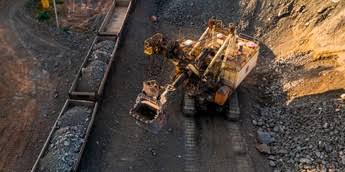
Guinea Becomes World's Third-Largest Seaborne Iron Ore Exporter, Overtaking Canada and South Africa
Simandou project drives export growth as China expands its access to West African mineral resources
Guinea has emerged as the world's third-largest seaborne iron ore exporter, overtaking South Africa and Canada following a sharp increase in shipments, particularly to China.
The West African country's rapid rise in the global mineral market has been driven largely by the development of the massive Simandou mining project, which is opening new opportunities for iron ore production and international trade.
Data from the Baltic and International Maritime Council (BIMCO) show that Guinea exported more than five million tonnes of iron ore in October 2026. This represented approximately three per cent of global seaborne shipments for the month.
By comparison, Canada recorded 4.62 million tonnes, while South Africa shipped 3.34 million tonnes during the same period, according to BRS Shipbrokers' November report.
Guinea's exports have also exceeded 22 million tonnes so far in 2026, surpassing earlier industry projections of approximately 20 million tonnes for the entire year.
Simandou Project Reshapes Global Iron Ore Trade
Australia and Brazil remain the world's two largest seaborne iron ore suppliers, providing substantial quantities of the steelmaking material to China, the biggest importer.
Guinea's growing output is changing the rankings among the next group of major exporters, a position traditionally occupied by countries such as South Africa and Canada.
The expansion follows the start of operations at Simandou in late 2025, after years of delays linked to financing, infrastructure development and negotiations among project partners.
The mining development involves major international companies, including Rio Tinto and China's Baowu Steel. Its infrastructure includes a railway connecting the mineral deposits to a deep-water export terminal, providing a route for transporting large volumes of iron ore to international markets.
BIMCO shipping analysis manager Filipe Gouveia said shipments from Guinea travel an average of 88 per cent farther than typical seaborne iron ore cargoes, with exports going almost entirely to China.
Consequently, Guinea accounted for six per cent of global iron ore tonne-mile demand in October, twice its share of cargo volumes. Tonne-mile demand measures the volume of cargo transported against the distance travelled, meaning longer shipping routes can increase demand for large bulk carriers.
At full operational capacity, Simandou is expected to produce approximately 120 million tonnes of iron ore annually, potentially further strengthening Guinea's position in the international market.
Gold Export Rules Create Challenges for Mining Companies
While Guinea's iron ore industry is expanding, the government has introduced stricter regulations affecting another major mineral resource: gold.
Under rules introduced in July 2026, mining companies are required to refine gold within Guinea before exporting it. A 90-day transition period ended on October 6, bringing the requirement into effect.
The policy has disrupted operations at several international mining companies, including South Africa's AngloGold Ashanti, Russia-backed Nordgold and Australia's PDI Gold.
Reports indicate that administrative delays and limited domestic refining capacity have left some companies unable to export their gold, with the value of the affected holdings running into tens of millions of dollars.
In response to the processing challenges, Guinea inaugurated the Nimba Gold Refinery on November 1. Mines Minister Bouna Sylla confirmed that the facility had commenced operations.
The government has also appointed a United Arab Emirates-based company to operate the refinery as part of efforts to increase domestic processing and retain more economic value from the country's mineral resources.
The new requirements apply to unrefined gold exports and are separate from the country's iron ore trade.
United States Seeks Greater Role in Guinea's Mining Sector
Guinea's expanding mineral industry is also attracting increased attention from the United States, which is seeking to strengthen its access to strategic resources and diversify supply chains amid China's strong presence in the sector.
On November 16, Mines Minister Bouna Sylla said the country was seeking financing for a proposed 1.9 billion-dollar deep-water port. Potential funding partners include the US International Development Finance Corporation, Chinese investors and multilateral lenders.
The proposed facility would support mineral exports and wider commercial activities, offering an additional route for transporting resources from Guinea to international markets.
The United States already has a history of involvement in Guinea's bauxite industry. In 2016, it supported a financing package worth more than 795 million dollars to expand production at Compagnie des Bauxites de Guinée.
However, China maintains a significant presence in the country's mining sector, particularly through companies such as Baowu Steel and Chinalco, which have interests connected to the Simandou development.
Access to Simandou's high-grade iron ore could help China diversify its supply sources and reduce its dependence on established exporters such as Australia and Brazil.
Guinea's rising export volumes, new processing regulations and infrastructure ambitions reflect a broader effort to strengthen its position in global mineral trade. As major economies compete for access to its resources, the country is becoming an increasingly important player in the international iron ore market.
Source: Business Insider Africa