 Canada
 United States
 United Kingdom
 Nigeria
CANADA | CONSUMER AFFAIRS
Frustrated by lengthy hold times and difficulty reaching customer service representatives, an Ontario resident is calling for enforceable standards to protect telecommunications customers.
An Ontario resident is calling on Canada's federal government to introduce stricter customer service rules for telecommunications companies, following repeated difficulties reaching a human representative to resolve billing and account issues.
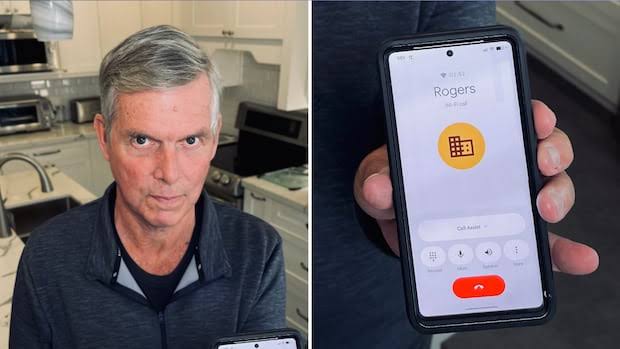
Frank Brown, from Aurora, Ontario, began pushing for reform after spending nearly an hour trying to contact Rogers Communications last June. He was seeking an explanation for a $25 charge on his mother's account, which he manages.
Brown said he attempted to get assistance through both the company's telephone service and online chat. After more than 40 minutes without a satisfactory response, he abandoned the online conversation and eventually ended the call as well.
When he tried again two days later, he said he could not even join the telephone queue because a recorded message indicated that the system was overloaded and unable to accept more calls.
“It isn't customer service if you can't talk to anybody.”
Brown argues that customers should be able to speak directly with a human representative without having to pay extra or endure excessive waiting periods. He has since launched a parliamentary petition asking Ottawa to require telecommunications providers to connect callers with a human agent within 10 minutes.
Growing complaints against telecom providers
Brown's experience reflects concerns raised by customers across Canada about lengthy hold times, disconnected calls, automated systems and difficulties resolving billing or account problems.
Complaints submitted to the Commission for Complaints for Telecom-television Services (CCTS), Canada's telecommunications complaints body, increased by 79 per cent in the 2025-2026 reporting period compared with the previous year.
However, the organisation does not have a mandate to specifically investigate customer service problems such as excessive waiting times. This means consumers may have limited options for formally challenging the difficulties they encounter when trying to reach their providers.
Mohammed Halabi, whose company MyBillsAreHigh.com helps individuals and businesses reduce their telecommunications and internet expenses, said customer service standards had deteriorated significantly over the past two years.
He argued that telecom companies needed to be held accountable for the quality of assistance they provide to customers.
What Rogers, Bell and Telus say
When approached about the proposed 10-minute requirement, Canada's three major telecommunications providers offered differing details about their customer service performance.
Rogers declined an interview but said in a written statement that customers waited an average of approximately seven minutes to reach a representative this year. The company maintained that only a very small percentage of callers abandon their calls before speaking with an agent and said it was continuing efforts to improve the customer experience.
Bell and Telus also said the vast majority of their customer calls were answered within minutes. However, neither company provided figures showing how many callers give up before reaching a representative.
These figures have become part of the debate because customers who abandon calls before getting through are not included in the companies' average waiting-time calculations.
Rogers eventually credited the disputed $25 charge to Brown's mother's account in July, describing the adjustment as a goodwill gesture. The company also acknowledged that he had experienced frustration while seeking assistance.
Brown, however, said the resolution did not address the wider problem. He has continued to contact his provider over other account-related matters and maintains that customers need stronger protections.
Job cuts and automation under scrutiny
Industry observers have also raised concerns about the impact of workforce reductions and increased automation on customer support services.
According to Unifor telecommunications director Roch LeBlanc, approximately 20,000 jobs have been lost in the sector over the past 10 to 15 years as companies increasingly rely on automation and offshore operations.
Halabi believes the growing use of artificial intelligence and automated customer service systems has made it more difficult for some customers to resolve problems, particularly when the technology misunderstands requests or directs callers to the wrong department.
He warned that the situation could be especially stressful for senior citizens and other customers who need direct assistance from a person.
Spain's three-minute customer service requirement
Brown is pointing to Spain as an example of how governments can introduce enforceable customer service requirements.
Legislation passed in Spain in December 2025 requires companies with more than 250 employees to connect customers requesting a human representative within three minutes in 95 per cent of cases.
Although Brown considers that target ambitious, he believes Canada could begin with a more achievable 10-minute maximum waiting period.
His parliamentary petition calls on the federal government to direct the Canadian Radio-television and Telecommunications Commission (CRTC) to establish clear, measurable and enforceable customer service standards for telecommunications providers.
It also proposes meaningful penalties for companies that repeatedly fail to meet the required response time.
Petition seeks government response
Brown initially started a petition on Change.org, where more than 1,200 people had signed in support of his campaign. Some supporters shared accounts of waiting as long as two hours for assistance, while others described repeated unsuccessful attempts to resolve their concerns.
He subsequently launched a parliamentary petition, which calls for a maximum 10-minute telephone hold time for customers seeking access to a human agent.
According to the report, the parliamentary petition had received 425 signatures as of November 19 and needed to reach 500 by November 26 to trigger a written government response.
Brown is also scheduled to discuss the issue with the CRTC as the regulator begins hearings on consumer protections covering home telephone, wireless, television and internet services.
He says his campaign is driven by the belief that customers should not have to accept poor service as an unavoidable part of dealing with telecommunications companies.
SOURCE
CBC News – Go Public