 Canada
 United States
 United Kingdom
 Nigeria
Canada Expands Energy Export Strategy to Reduce Dependence on U.S. Market
New LNG agreements, oil sands incentives and a proposed Pacific pipeline target buyers in Europe and Asia
Canada is accelerating plans to expand its energy exports beyond the United States, pursuing new markets in Europe and Asia through liquefied natural gas (LNG) agreements, investment incentives and a proposed oil pipeline to the Pacific Coast.
The shift comes as trade tensions with Washington increase pressure on Ottawa to reduce its dependence on its largest energy customer. In 2024, the United States accounted for virtually all of Canada's natural gas exports. The Canadian government now aims to send 55 per cent of those exports to other international markets by the mid-2030s.
As part of the strategy, German energy company Uniper has agreed to purchase LNG from a planned terminal in British Columbia under a long-term supply arrangement. Canada is also advancing a proposed pipeline designed to transport up to one million barrels of Alberta crude oil daily to the Pacific Coast for shipment to Asian markets.
Meanwhile, Alberta has introduced lower royalty rates for qualifying new oil sands projects as it seeks to attract investment and increase production.
Trade Tensions Push Canada Towards New Markets
Prime Minister Mark Carney has been promoting the country's trade diversification strategy during international engagements, including the 33rd Asia-Pacific Economic Cooperation (APEC) summit in Shenzhen, China.
Carney met Chinese President Xi Jinping ahead of the summit and also held a brief conversation with United States President Donald Trump during the gathering. According to the Canadian prime minister's office, the discussion with Trump focused on efforts to reach a mutually beneficial trade agreement.
However, the meeting is not expected to immediately resolve tensions between the neighbouring countries. Trump's administration has imposed tariffs on several Canadian products, including a 50 per cent levy on approximately US$20 billion worth of goods. Additional tariffs targeting Canadian cars, auto parts and steel are scheduled to take effect on January 1, 2027.
Carney's government has responded with retaliatory measures while pursuing alternative trade relationships, particularly with China and European countries.
Canada and China Expand Trade Cooperation
During their meeting, Carney and Xi agreed to expand aspects of the two countries' trade relationship, restoring market access for more than 90 per cent of Canadian exports previously affected by Chinese tariffs.
China also agreed to remove or reduce duties on additional Canadian products valued at about 400 million dollars, including frozen pork and seafood.
In return, Canada extended existing tariff exemptions covering certain Chinese steel and aluminium products for another two years. It also introduced relief measures for 32 additional steel and aluminium products facing domestic supply shortages.
The leaders discussed cooperation in the oil and gas sector. Canadian exports to China increased by almost 40 per cent during the first nine months of the year, highlighting the growing importance of the Chinese market to Ottawa's diversification plans.
Alberta Offers Lower Royalties to Attract Investment
Alberta is also introducing incentives to encourage new investment in its oil sands industry. Premier Danielle Smith's government recently announced a 10-year preferential royalty framework for new developments and expansions that meet specified production requirements.
Under the arrangement, qualifying projects that add at least 5,000 barrels per day will pay a gross revenue royalty of two per cent during their first five years of production. The rate will then increase by one percentage point annually, reaching six per cent in the ninth and tenth years.
The provincial government hopes the incentives will help double oil sands production to eight million barrels per day by 2035.
Alberta estimates that achieving the target could generate an additional 205 billion Canadian dollars in government revenue by 2040, rising to more than 1.3 trillion dollars by 2060.
Smith has also indicated that investors from Asia and the Middle East, including sovereign wealth funds, have expressed interest in taking stakes of between 15 and 30 per cent in a proposed pipeline connecting Alberta to the Pacific Coast.
Pacific Link Pipeline Targets Asian Buyers
The proposed West Coast oil pipeline, renamed Pacific Link, is a central part of Canada's plan to expand access to international energy markets.
Prime Minister Carney designated the project a Project of National Interest under the federal Building Canada Act in October, allowing it to advance through the country's infrastructure development framework.
The proposed route would extend approximately 1,250 kilometres from Alberta to a deepwater export terminal near Delta, British Columbia. It is expected to largely follow the existing Trans Mountain corridor and would have the capacity to transport up to one million barrels of crude oil per day.
Alberta estimates the project could cost between 35.2 billion and 43.7 billion Canadian dollars.
The federal and Alberta governments are expected to hold equal ownership, while Trans Mountain Corporation will oversee development. Indigenous communities will also be offered a minimum 10 per cent stake, supported by federal and provincial loan guarantees.
Pipeline company Pembina Pipeline Corporation has joined the project as a private investor, with a 10 per cent economic interest during the construction phase.
The United States remains Canada's dominant energy customer. It received 90.8 per cent of Canada's hydrocarbon exports by volume, while Canada supplied approximately 3.9 million barrels of crude oil per day to the US in 2024, representing 63.4 per cent of total American crude imports.
Canada Strengthens LNG Partnerships with Europe
Alongside its oil export plans, Canada is expanding its capacity to supply natural gas to international customers.
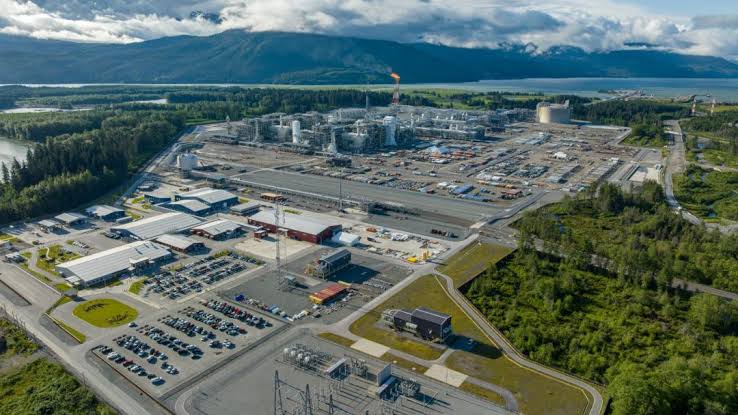
In July, Germany's Uniper signed an agreement to purchase up to two million metric tonnes of LNG annually from the proposed Ksi Lisims LNG project in British Columbia. The arrangement could run for up to 20 years, with deliveries expected to begin in 2032.
The project is led by the Nisga'a Nation and is among the developments expected to support Canada's ambitions in the global LNG market.
Ottawa has also committed 200 million Canadian dollars over three years to support the expansion of the Woodfibre LNG facility near Squamish, British Columbia. The investment is expected to increase the plant's annual capacity by nearly 25 per cent to 2.6 million tonnes.
Through these initiatives, Canada is seeking to build stronger energy partnerships, attract international capital and establish additional export routes. While the United States remains its largest energy market, the government is positioning the country to serve a broader range of customers across Europe and Asia.
Source: OilPrice.com